
Frosted Glass Film vs Etched Glass: Which Is Better for Dubai Offices?
Both options can create privacy and a more polished office interior, but they solve the problem in different ways. Etched glass is a permanent architectural finish. Frosted film is a removable surface application that is easier to update when branding, privacy needs or office layouts change.
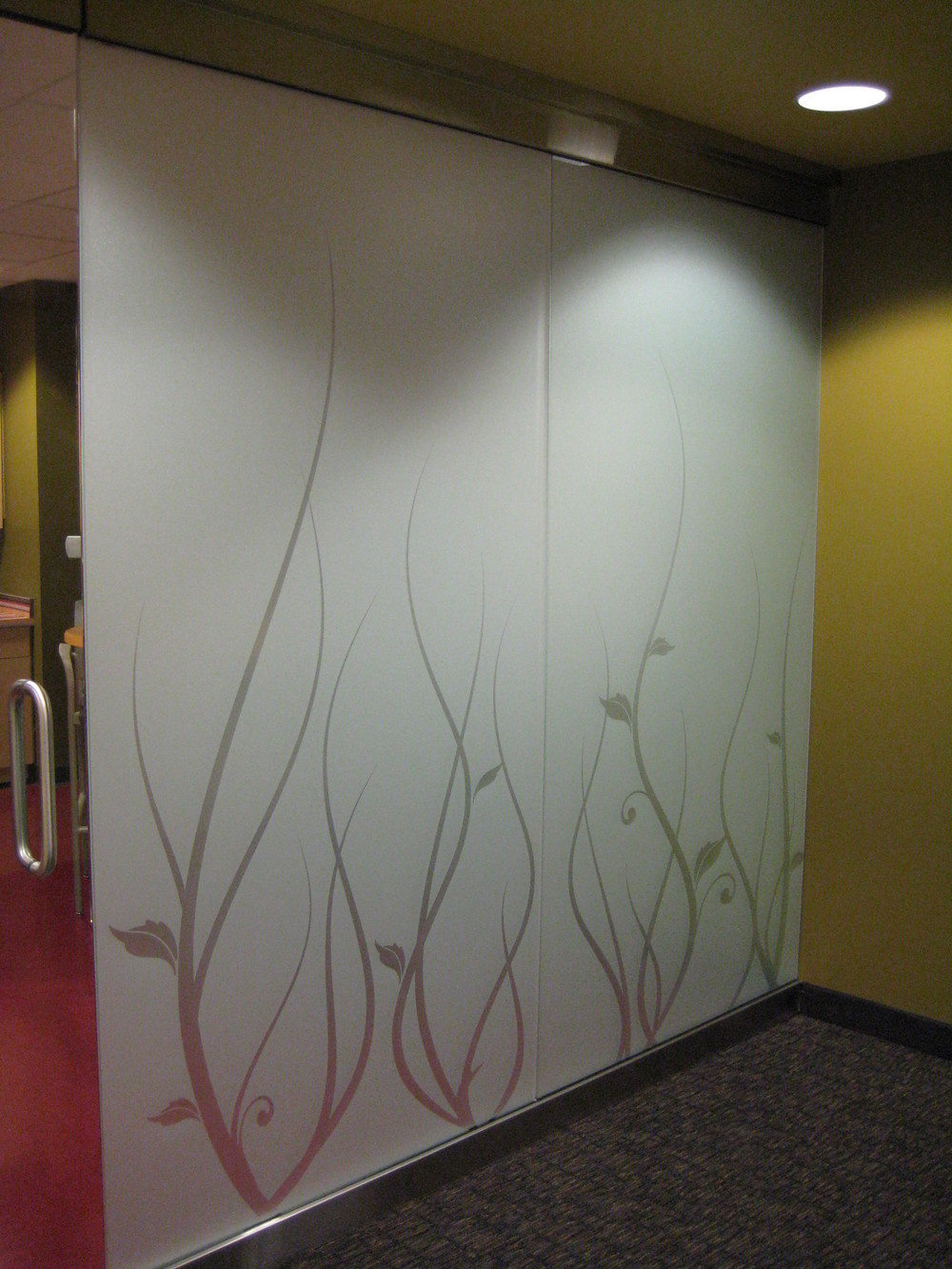
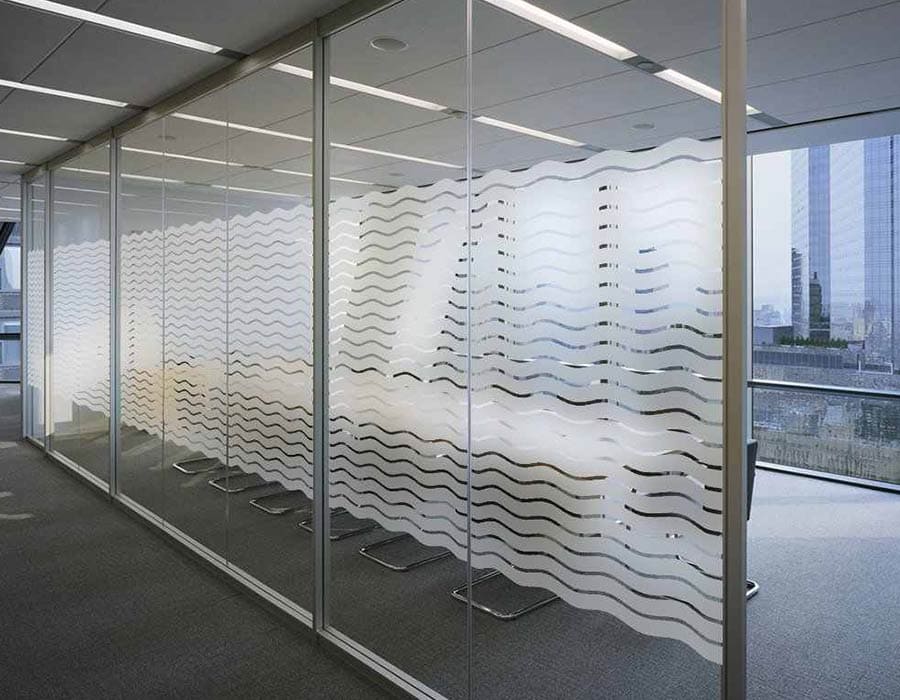
For most offices that may change branding, move premises, reconfigure meeting rooms or need easier updates, frosted film is usually the more flexible option. Etched glass still makes sense when the design is intentionally permanent and the higher replacement effort is acceptable.
What is etched glass?
Etched glass is glass whose surface has been permanently altered to create a frosted or decorative effect. Because the finish becomes part of the glass itself, it is suited to projects where the visual treatment is expected to remain for the long term.
The main trade-off is flexibility. If the office logo, layout or privacy requirement changes later, the design cannot simply be peeled off and replaced. In many cases, changing the look means changing the glass panel or accepting the existing design.
What is frosted glass film?
Frosted glass film is an applied privacy film that gives clear glass a frosted appearance without permanently changing the glass itself. It can be installed as a full panel, privacy band, pattern or branded design.
This is why it is common on meeting rooms, office partitions, reception areas and internal glass doors. The film can be replaced when the office layout or branding changes, provided the glass and installation conditions are suitable.
Frosted film vs etched glass: the practical differences
| Factor | Frosted film | Etched glass |
|---|---|---|
| Permanence | Removable / replaceable | Permanent finish |
| Design updates | Relatively easy | Difficult without replacing glass |
| Branding | Good for logos, bands and patterns | Possible, but permanent |
| Privacy | Adjustable by coverage and design | Built into the glass treatment |
| Installation disruption | Usually lower | Can be higher if glass must be fabricated or replaced |
| Rented offices | Often more practical | Less flexible |
| Future changes | Easier to manage | Limited flexibility |
When etched glass makes more sense
Useful when the glass treatment is intended to remain part of the office for many years.
More suitable when the business is confident the logo, pattern and layout will not need regular changes.
Can make more sense where the property owner is investing in a permanent interior specification.
The reduced flexibility is less of a concern when the design is deliberately permanent.
Etched glass is not the wrong choice. Its weakness is simply that permanence becomes a disadvantage when the office is likely to change.
When frosted film makes more sense
Logos, lines and patterns can be replaced without changing the whole glass panel.
Meeting rooms and partition uses often evolve as teams grow or move.
Coverage can be adjusted instead of treating every glass panel the same way.
Film installation normally avoids the level of work associated with replacing fabricated glass.
Not sure which option suits your office?
Send J Designo photos of the glass, approximate dimensions and the level of privacy you want.
Privacy without making the office feel closed
One of the strongest reasons businesses use frosted film is that privacy can be created without covering every panel from floor to ceiling. A band across eye level may be enough for some meeting rooms, while HR, finance or management spaces may need more coverage.
The design should start with the actual privacy problem: what needs to be obscured, from which direction, and at what height. A full opaque-looking wall is not always necessary.
Frosted film can carry office branding as well as privacy
Frosted film does not have to be a plain rectangle. It can be cut or arranged to support the office identity while still improving privacy.
Use negative or positive logo shapes within a frosted section.
Useful for meeting rooms and corridors where full coverage is unnecessary.
Geometric or brand-inspired patterns can create privacy without making the glass visually heavy.
Keep selected areas clear while frosting the areas that need screening.
Dubai office considerations before choosing
Rented office space
When an office is leased, removability can be valuable. Businesses may need to restore or update glass at the end of a tenancy, so a replaceable film can be easier to plan around than a permanent treatment.
Fit-out and landlord requirements
Before installation, confirm whether the building or landlord has rules affecting glass modifications, branding visibility or access for installers. The article source does not specify any universal Dubai rule, so this should be checked for the actual property.
Future relocations or rebranding
If the company expects growth, relocation or brand changes, a removable solution usually gives more room to adapt without replacing the glass itself.
Common mistakes to avoid with office glass frosting
- Assuming frosted means fully opaque. Many films soften visibility rather than completely block it.
- Choosing coverage before deciding the privacy height. Measure where people can actually see through the glass.
- Ignoring future removal. Ask whether the installation is temporary, long-term or likely to change.
- Using a logo that is too small or too detailed. Fine artwork may not translate well when cut into film.
- Skipping surface preparation. Clean glass is essential for a professional finish.
- Not planning around door handles, joints or frames. These details affect the final layout.
What to send before requesting a quote
Ready to price the project?
Send the glass dimensions, photos and preferred design direction.