
Types of Business Cards: Which One Is Right for Your Business?
The best business card is not necessarily the thickest, most unusual or most expensive one. It is the card that fits how you meet customers, how your brand should feel, how much information you need to show and how often the cards will be handed out. This guide compares the main business card types and finishes so you can choose with a clear reason.
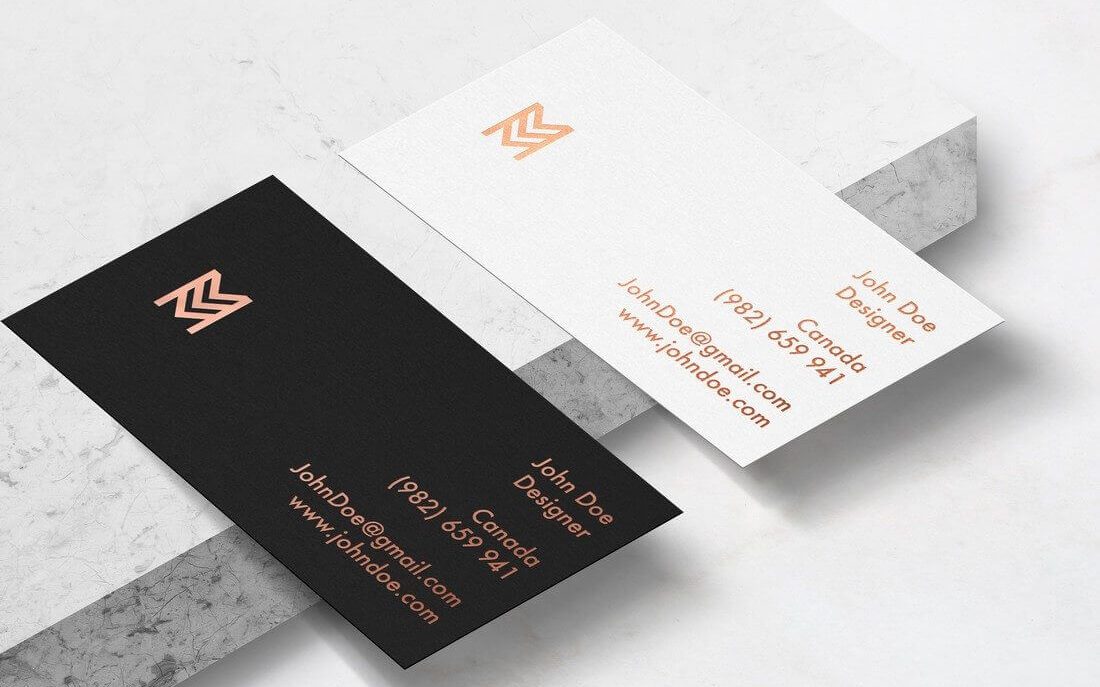
For most companies, a well-designed standard card on a good stock is enough. Choose a premium finish when the card itself needs to communicate a more distinctive brand position. Use folded cards only when you genuinely need extra information, die-cut cards when shape supports the brand, and plastic or specialty cards when durability or presentation justifies the higher cost.
Start with the job the card needs to do
Before choosing paper, coating or a special effect, decide how the card will actually be used. A salesperson handing out hundreds of cards at exhibitions has different needs from a luxury consultant giving a card to a small number of high-value clients.
Do not add premium finishes just to make a card “fancy”. Every extra finish should support the brand or improve how the card is used.
Business card types compared
| Card type | Best for | Main advantage | Watch for |
|---|---|---|---|
| Standard card | Most businesses | Simple, familiar, easy to reorder | Design and stock quality matter |
| Folded card | Extra information | More usable space | Can become bulky or overfilled |
| Die-cut card | Creative brands | Distinctive shape | Shape must remain practical |
| Plastic card | Durability-focused use | Water-resistant and robust | Higher cost and different feel |
| Magnetic card | Service reminders | Can stay visible on metal surfaces | Not a universal networking card |
| Premium-finish card | High-value brand presentation | Stronger tactile impression | Finishing should not hurt readability |
Standard business cards: still the right choice for most companies
A standard rectangular card is not a basic choice in a negative sense. It is familiar, practical and easy to store. When typography, spacing, paper stock and print quality are handled properly, a standard card can look more professional than a complicated card with too many effects.
This format works especially well for sales teams, consultants, real-estate professionals, restaurants, contractors, corporate staff and businesses that need frequent reprints.
What makes a standard card feel premium?
- Enough white space rather than filling every corner.
- A clear name, role and contact hierarchy.
- Consistent brand colours.
- A stock that feels appropriate for the brand.
- A finish that improves the card instead of distracting from it.
Folded business cards: useful when you really need more space
Folded cards give you additional surfaces for information. They can work for businesses that need to show a short service list, appointment information, a small menu, instructions or another piece of information that would make a normal card too crowded.
The downside is obvious: extra space often encourages people to add too much content. A folded card should still feel like a business card, not a miniature brochure.
Die-cut business cards: use shape with a purpose
Die-cutting allows a card to move beyond the standard rectangle. Rounded corners, shaped edges or a custom silhouette can make sense for creative companies, hospitality brands, salons, events or concepts where the shape is part of the visual identity.
But an unusual shape is not automatically better. If the card no longer fits easily in a wallet or card holder, the design can become memorable for the wrong reason.
If the custom shape makes the brand easier to remember without making the card harder to keep, it is doing its job.
Plastic business cards: when durability matters more
Plastic cards can make sense where the card is likely to be handled repeatedly, exposed to moisture or intentionally kept for longer. They also create a noticeably different tactile impression from paper.
They are not automatically the right premium option for every company. Paper can often feel warmer and more refined for professional services, while plastic may fit better for membership-style concepts, hospitality, gyms, maintenance businesses or other environments where durability matters.
Magnetic business cards: better as a reminder than a networking card
Magnetic cards are useful when staying visible is more important than fitting into a wallet. They can work for repair services, delivery businesses, maintenance providers, restaurants or other businesses whose contact information customers may want to keep nearby.
For formal meetings or general networking, however, a conventional paper or premium card is usually more practical.
Matte, gloss, soft-touch, foil or embossing?
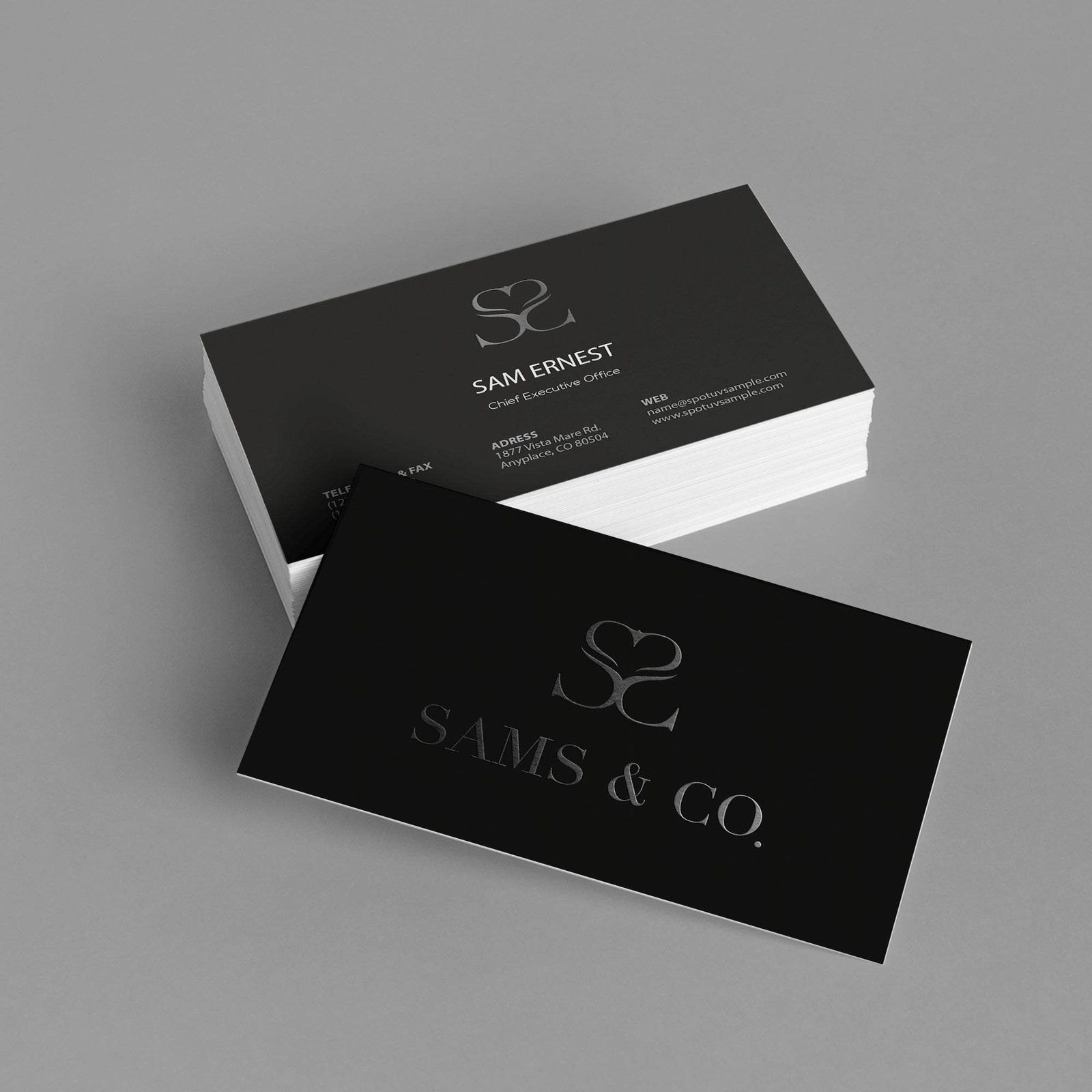
Finish changes both the look and the feel of a business card. It should be chosen after the card design, not before it.
Lower glare and a clean, understated finish that works well for many corporate designs.
More reflective and useful when strong image or colour impact is part of the design.
A tactile finish suited to brands that want a smoother, more premium hand-feel.
Useful for highlighting selected details such as a logo or name when used with restraint.
Adds physical depth to selected elements and can work well with simpler layouts.
Best used to create contrast on specific elements rather than covering the whole design.
Not sure which finish fits your brand?
Send your logo or existing card artwork to J Designo and explain how the cards will be used.
Paper thickness matters — but thicker is not always better
A thicker stock can feel more substantial, but thickness alone does not determine quality. Surface texture, stiffness, coating, print quality and finishing all contribute to the final feel.
If cards are handed out in high volume, a practical stock may be the better commercial decision. If each card is part of a high-value client interaction, a heavier or more distinctive stock may be justified.
What information should actually go on the card?
One of the most common problems is trying to fit every company detail onto a small surface. A business card should make the next action easy.
Service lists, long slogans and multiple social handles are often better left off unless they serve a clear purpose.
How to choose the right business card for your business
| If your priority is… | Start with… |
|---|---|
| Professional everyday networking | Standard card + good stock + matte or uncoated finish |
| Premium client presentation | Heavier stock + restrained premium finishing |
| Creative brand recognition | Die-cut or distinctive stock |
| More information | Folded card |
| Durability / moisture resistance | Plastic card |
| Keeping contact details visible | Magnetic card |
| Large team / frequent reorders | Standardized design that is easy to reproduce |
Choose the simplest card that still communicates the brand correctly. A clear card that people keep is more useful than a complicated card designed only to impress for five seconds.
What to prepare before asking for a business card quote
- Quantity — number of cards and number of staff names.
- Final size — standard or custom.
- Single or double sided — depending on the design.
- Stock preference — or tell the printer the feel you want.
- Finish — matte, gloss, foil, embossing or another requirement.
- Artwork — finished artwork or editable logo/brand files.
- Deadline — especially for exhibitions, meetings or launches.
Already know your quantity and finish?
Send the card details and artwork through the quote page.