
Window Tinting Dubai for Heat Control, Glare Reduction & Daytime Privacy
Professional architectural window tinting in Dubai for offices, villas, apartments, shops, clinics, hotels and commercial buildings. Choose solar-control, reflective, neutral, privacy, decorative or safety window film according to the glass, sun exposure, daylight target and privacy requirement.
- Solar & Heat-Control Film
- Glare Reduction
- Daytime Privacy
- Commercial & Residential Glass
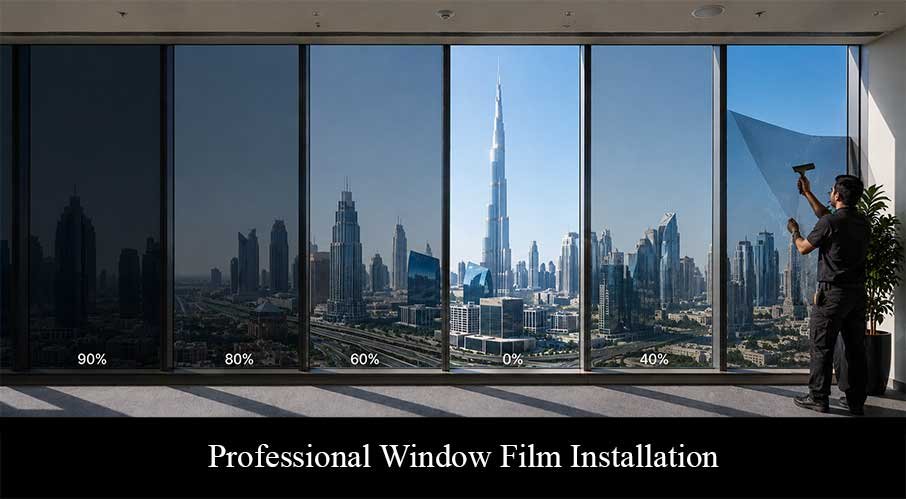
Different window films solve different glazing problems
Architectural window film should be selected around the result you need. Solar-control film targets heat and glare. Reflective film can increase daytime privacy. Neutral or clearer films preserve more daylight. Decorative and frosted films change visibility and appearance. Safety film is designed around glass-fragment retention rather than solar performance alone.
A single building can need more than one film type. For example, sun-exposed façade glass may need solar control while internal meeting-room partitions need frosting instead.
Solar-Control Film
For exterior glazing where solar heat, hot spots and screen glare are the main problems.
Reflective Privacy Film
For street-facing or exterior glass where reduced inward visibility is useful during brighter daytime conditions.
Neutral / Clearer Film
For projects that want solar performance while maintaining more natural daylight and a less reflective appearance.
Decorative & Specialty Film
For design-led glass treatments, colour effects and selected interior applications where appearance is part of the brief.
Frosted Privacy Film
For meeting rooms, partitions and glass where obscured visibility is required more consistently than reflective tint provides.
Safety Window Film
Specialized film used to help retain broken glass. Exact film thickness and attachment details depend on the project requirement.
Nano-Ceramic Film
A film category often selected where solar control and a less mirror-like appearance are priorities.
Dark / Black Film
For projects where stronger glare reduction, appearance and daytime privacy are acceptable alongside lower visible-light transmission.
Match the film to the glass, room and viewing conditions
Exterior windows, reception façades and internal partitions do not need the same film. The installation context should guide the product choice.
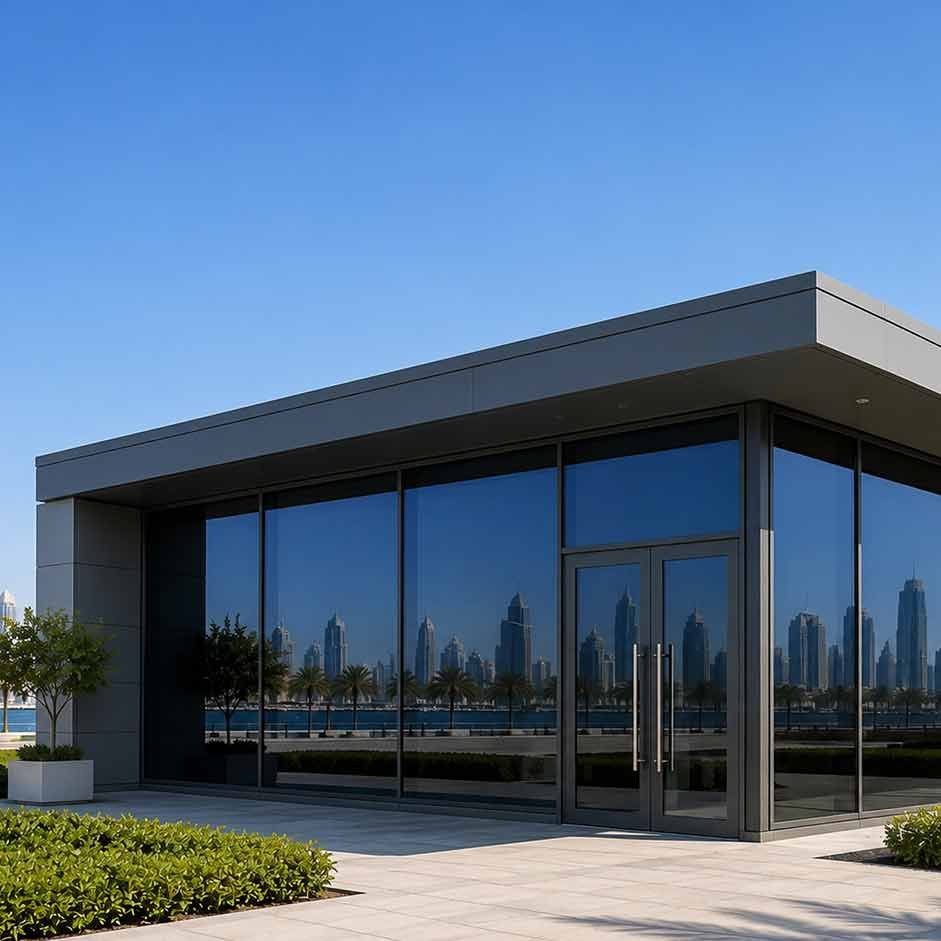
Solar-control film can help make perimeter workspaces more usable while preserving useful daylight.
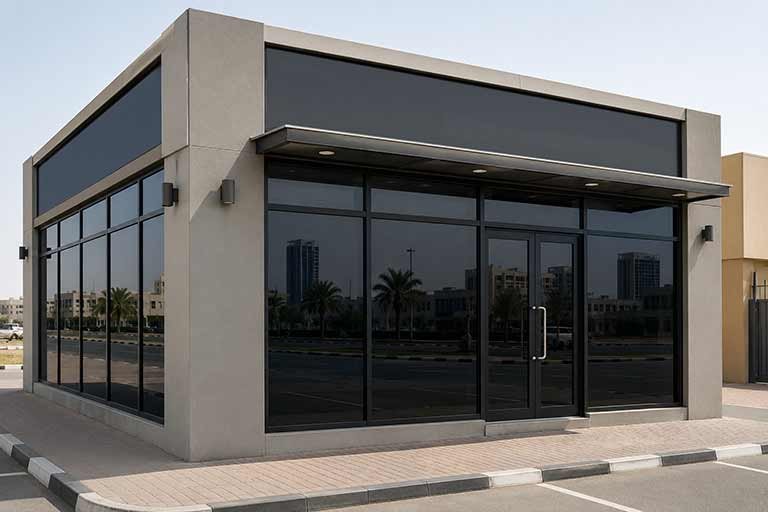
Useful for living spaces and windows affected by strong afternoon sun or glare.
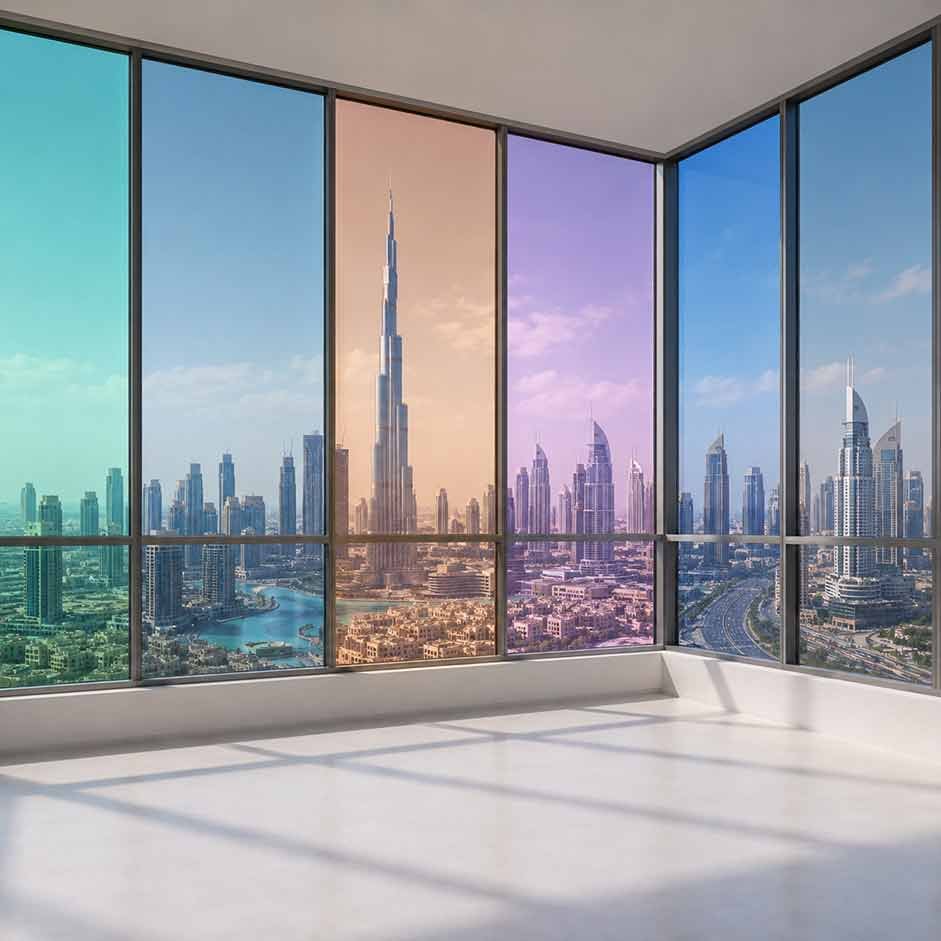
Specialty films can add colour, pattern or visual effects where performance is not the only requirement.
Use technical values to compare window films—not shade alone
Two films can look similar and perform differently. Architectural films are commonly compared using measurable performance terms that describe daylight, solar-energy rejection, glare and reflectivity.
| VLT | Visible Light Transmission: how much visible light passes through the filmed glass. Higher VLT generally means a lighter-looking result. |
|---|---|
| TSER | Total Solar Energy Rejected: the percentage of total solar energy rejected by the glazing-and-film system. |
| UV Rejection | Shows how much ultraviolet radiation is rejected. Check the technical data for the specific film rather than assuming one universal figure. |
| Glare Reduction | Indicates how much visible glare is reduced, especially relevant for offices and screen-facing workspaces. |
| Reflectance | Indicates how reflective the filmed glass appears. Higher reflectance can improve daytime privacy but changes the exterior appearance more noticeably. |
Comfort, glare, daylight management and selected privacy needs
Solar-control film changes the way solar energy interacts with the glass by altering transmission, reflection and absorption. Depending on the selected film, it can reduce unwanted heat and glare while retaining useful daylight.
UV-rejecting films can also help reduce one contributor to fading of flooring, fabrics, furniture, displays and artwork. Exact results depend on the product and the existing glazing system.
Solar Heat Control
Useful where sun-exposed windows create uncomfortable hot spots near desks, seating or customer areas.
Glare Reduction
Helps reduce harsh screen reflections and visual discomfort in offices and strongly sunlit rooms.
Interior Protection
UV-rejecting films can help reduce one cause of fading on furniture, flooring, fabrics and retail displays.
Daytime Privacy
Reflective films can reduce inward visibility when the exterior side is brighter than the interior.
Reflective tint and frosted film solve different privacy problems
Best when heat, glare and daytime visibility matter
- Solar-control and heat-rejection options
- Glare reduction for screens and sun-exposed spaces
- Reflective daytime privacy options
- Clearer / neutral film options where daylight matters
- Privacy depends on relative lighting conditions
Best when consistent visual privacy is the priority
- Obscures the view through glass
- Useful for meeting rooms and internal partitions
- Can support privacy bands and office branding
- Not primarily a solar-control solution
- Explore Glass Frosting →
Window tinting for offices, villas, shops, clinics and hospitality
Reduce solar discomfort and glare near perimeter desks, meeting rooms and reception glazing.
Improve comfort on strongly sun-exposed windows while keeping useful daylight where possible.
Manage glare and solar exposure on display areas and customer-facing glazing.
Use appropriate film for comfort, selected privacy and glare control without replacing the glazing.
Window film can support comfort and appearance in lounges, dining spaces, entrances and guest-facing areas.
Large glazed façades may require film selection based on orientation, glass type and different sun-exposure zones.
The glass specification matters as much as the film
Single glazing, double glazing, laminated glass and existing tinted glass can behave differently. Film selection should account for the actual glazing, sun orientation and installation side rather than assuming one product suits every window.
For a useful quotation, share clear photos, approximate dimensions, property type, whether the glass is internal or external, and your main priority—heat, glare, daytime privacy, decoration or safety.
Useful information before a site assessment
- Photos of the glass from inside and outside
- Approximate width and height
- Office, villa, shop or other property type
- Direction of strong sun if known
- Main problem: heat, glare, privacy or appearance
- Any landlord or building-management requirements
From glass assessment to completed window-film installation
Share the glazing
Send photos, approximate measurements and explain the main performance requirement.
Review glass & exposure
Confirm glazing type, orientation, access and whether the project is interior or exterior facing.
Choose the film
Compare daylight, TSER, glare reduction, reflectance and privacy before approving the direction.
Install on site
Glass is prepared, film is applied and edges are finished according to the selected product and application.
Use the right treatment for each glass surface
Need window tinting in Dubai?
Send photos of the glass, approximate dimensions, location, property type and your main goal—heat control, glare reduction, daytime privacy, decoration or safety. J Designo can then discuss the most appropriate film direction and whether a site assessment is useful.
Questions before installing architectural window film
What is architectural window tinting?
Architectural window tinting applies a specialist film to building glass to change characteristics such as solar heat gain, glare, visible-light transmission, reflectivity, privacy or glass-retention performance. The correct product depends on the glazing and project objective.
Does window film reduce heat in offices and villas?
Solar-control films are designed to reduce the amount of solar energy entering through glazing, which can improve comfort near sun-exposed windows. Performance varies by film and glass type, so compare the technical data for the selected product.
Will window tinting make the room too dark?
Not necessarily. Films are available with different visible-light transmission levels. Neutral and clearer solar-control films can preserve more daylight, while darker or more reflective films change the appearance more noticeably.
Does reflective film provide privacy at night?
Do not rely on reflective or one-way film for guaranteed night-time privacy. The effect depends on which side of the glass is brighter. When the interior is brighter than outside, visibility can reverse. Frosted film is more suitable when consistent visual privacy is required.
What do VLT and TSER mean?
VLT means Visible Light Transmission—the percentage of visible light passing through the filmed glass. TSER means Total Solar Energy Rejected—the percentage of total solar energy rejected by the glazing-and-film system.
What is the difference between window tinting and glass frosting?
Window tinting is mainly used for solar control, glare reduction, reflectivity and selected daytime privacy. Frosted film obscures the view through glass and is usually better for meeting rooms, internal partitions and privacy-focused office applications.
Does safety film make glass burglar-proof?
No. Safety or security film can help retain broken glass, but the level of protection depends on the film, glass, frame and any attachment system. It should not be described as burglar-proof or bullet-proof unless a specific tested system supports that claim.
What should I send for a window-tinting quote?
Send clear photos, approximate glass dimensions, property type, location, whether the glazing is internal or external, and your main goal such as heat control, glare reduction, daytime privacy, decoration or safety.
Tell us about your project.
Printing, signage, branding or event production. Share what you know — we'll help with the rest.
Share the briefTell us the product, quantity and deadline.
We review itOur team checks the production requirements.
We get back to youWe'll respond using your preferred contact method.