
Flyer Marketing in Dubai: When It Works, What Size to Use & How to Get Better Response
Flyers still have a useful place in local marketing when the campaign has a clear audience, a strong offer and a sensible distribution plan. The mistake is treating printing as the strategy. Before ordering, decide where the flyer will be handed out, what action you want people to take, how much information is genuinely needed and how you will measure the response.
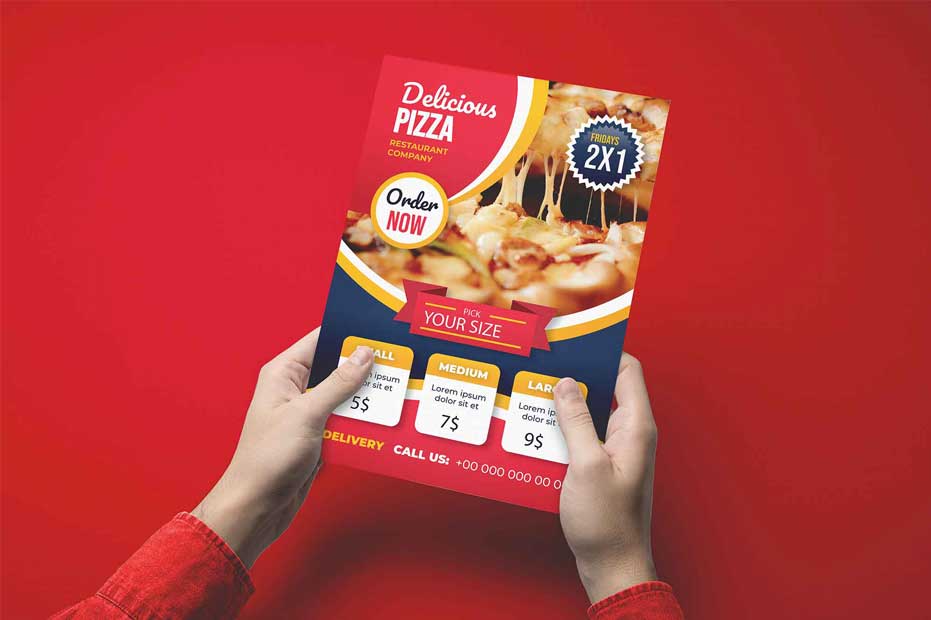
Yes—when the campaign is local, the offer is easy to understand and the flyer reaches people in the right place. Restaurants, salons, gyms, property businesses, retail stores, exhibitions and local service companies can all use flyers effectively. A flyer with no defined audience, weak headline or unclear call to action is simply printed paper.
When flyer marketing makes sense for a Dubai business
The strongest flyer campaigns usually have a geographic or situational advantage. You know where the audience is, you can place the offer directly in front of them, and the next action is simple.
Restaurants, salons, gyms, clinics and shops promoting to nearby residents or workers.
Handouts for visitors who already have an interest in the event or category.
Sales, seasonal offers, new product launches and in-store campaigns.
Cross-selling, repeat-order offers, loyalty promotions and QR-led campaigns.
Open houses, building-specific campaigns and neighbourhood prospecting.
Targeted distribution where the potential customer is already concentrated.
When flyers are probably the wrong channel
Flyers are less useful when your audience cannot be reached efficiently through physical distribution, when the service needs a long explanation before someone can understand it, or when there is no way to connect the handout to a measurable next step.
In those cases, a digital campaign, brochure, landing page, direct sales approach or a combination of print and digital may be more suitable.
Which flyer size should you choose?
Size should follow the message and distribution method. A6 is compact for a single promotion, A5 provides more room without becoming cumbersome, DL works well in racks and envelopes, while A4 suits content that people are expected to stop and read.
| Size | Dimensions | Best for | Content level |
|---|---|---|---|
| A6 | 105 × 148 mm | Vouchers, delivery inserts, short offers, high-volume handouts | Very concise |
| DL | Approx. 99 × 210 mm | Rack displays, direct mail, price lists, hospitality | Short to medium |
| A5 | 148 × 210 mm | General promotions, events, retail, restaurants, services | Medium |
| A4 | 210 × 297 mm | Property details, menus, price lists, product information | Detailed |
| A3 | 297 × 420 mm | Notice boards and lightweight poster-style use | Visual / display-led |
If you are unsure, start from the amount of information and how the flyer will be distributed. Do not choose A4 simply because it gives you more room—more room often leads to more unnecessary content.
Start with one campaign objective
A flyer works better when it has one main job. Trying to promote your company, list every service, advertise several discounts, introduce the team and tell the full brand story on the same sheet creates competing messages.
Before design starts, finish this sentence:
“After someone sees this flyer, the one thing I want them to do is ______.”
The answer might be visit a store, book an appointment, scan a QR code, use a voucher, attend an event, open a menu or contact the business.
How to design a flyer that can be understood quickly
A flyer is usually seen while someone is moving, talking or sorting through other material. The front should communicate the offer quickly rather than asking the reader to study a dense layout.
A useful hierarchy is:
- Headline — what is the offer, event or reason to care?
- Main visual — support the message instead of decorating empty space.
- Key details — date, location, price, service or benefit.
- Proof or reassurance — only where necessary.
- Call to action — one clear next step.
Single-sided or double-sided flyer?
A single-sided flyer is suitable when the message is extremely simple: one offer, one event or one action. Double-sided printing is useful when the front can capture attention and the reverse can hold supporting information.
Headline, hero visual, main offer and immediate CTA.
Supporting details, map, menu items, service information, terms or secondary CTA.
For UAE campaigns that need both English and Arabic, the second side can also help keep the layout readable rather than compressing both languages into one crowded face.
What paper weight and finish should you use?
Paper choice should reflect how the flyer will be handled and how long it needs to last. Lightweight paper can make sense for high-volume, short-life distribution, while heavier stock gives a more substantial feel for premium promotions or material that customers are expected to keep.
| Paper / finish | Useful for | Consider |
|---|---|---|
| Lighter uncoated stock | High-volume drops, inserts, short-term campaigns | Economical and writable, less premium feel |
| Mid-weight coated stock | Retail, restaurants, events, general promotions | Good balance of colour and handling |
| Heavier stock | Premium offers, property, corporate handouts | More substantial, higher cost and weight |
| Gloss | Photography and bright promotional graphics | Can reflect strong lighting |
| Matte | Corporate, premium or text-led layouts | Lower glare and more subdued appearance |
Use QR codes to connect print with digital
A QR code can turn a physical flyer into a measurable digital entry point. It should lead somewhere useful: an offer page, WhatsApp conversation, booking page, menu, event registration or product page.
Do not add a QR code without explaining why someone should scan it. “Scan to book,” “Scan for the menu,” or “Scan to claim the offer” is more useful than leaving the code unexplained.
Where you distribute flyers matters as much as the design
The old article correctly identified targeted distribution as one of the main strengths of flyers. The better question is not “How many flyers can we print?” but “Where can we reach the highest concentration of relevant people?”
Reception desks, counters, shopping bags, bills and takeaway orders.
Exhibitions, conferences, launches and relevant community events.
Complementary businesses where permission has been arranged.
Useful when your business serves a specific local catchment.
Good for repeat purchase, cross-sell and referral promotions.
Works best when the promoter can identify the right audience rather than distributing blindly.
Before public distribution, building drops or placement in shared areas, confirm permission and any applicable venue, community or local rules.
How to measure whether a flyer campaign worked
“We handed out 5,000 flyers” is a distribution metric, not a business result. Give the campaign a response mechanism that can be tracked.
How many flyers should you print?
Do not choose quantity only because a larger print run reduces unit cost. First estimate how many flyers can realistically be distributed to the intended audience before the offer expires.
For a new campaign, a smaller first run can be useful if you are still testing the headline, offer or distribution area. Once the response is clear, the artwork can be refined before a larger run.
Common flyer marketing mistakes
- No clear offer. “We provide quality service” gives the reader little reason to act.
- Too much information. A flyer should not become a compressed brochure.
- Weak headline. The most visible text should communicate the reason to read.
- Small QR code. If it cannot be scanned easily, it is wasted space.
- Generic distribution. More pieces do not compensate for the wrong audience.
- No tracking. You cannot improve a campaign when every response looks identical.
- Wrong paper for the job. Premium stock is unnecessary for every mass drop; very light stock may undersell a premium offer.
- Printing before proofreading. Check phone numbers, dates, prices, URLs, QR codes and addresses carefully.
What to prepare before requesting a flyer printing quote
- Size — A6, DL, A5, A4 or custom.
- Quantity — based on the real distribution plan.
- Single or double-sided — define content before choosing.
- Paper preference — or explain how the flyer will be used.
- Finish — gloss, matte, uncoated or another requirement.
- Artwork — print-ready PDF or editable source if design support is required.
- Delivery deadline — especially for events and time-sensitive promotions.
- Campaign objective — useful if you need help choosing format or paper.
Planning a flyer campaign in Dubai?
Send J Designo the size, quantity, deadline and how you plan to distribute the flyers. If you are unsure about the format, explain the campaign and we can discuss the practical print options.