
What is Frosted Glass Stickers in Dubai?
What Is Frosted Glass Film? Types, Uses & How It Works
Frosted glass film is a translucent film applied to clear glass to create a blurred, etched-glass appearance. It reduces direct visibility while still allowing light through, and it can be used as plain frosting, privacy bands, gradients, patterns or branded graphics. This guide explains the terminology, the main types and where each option makes sense.
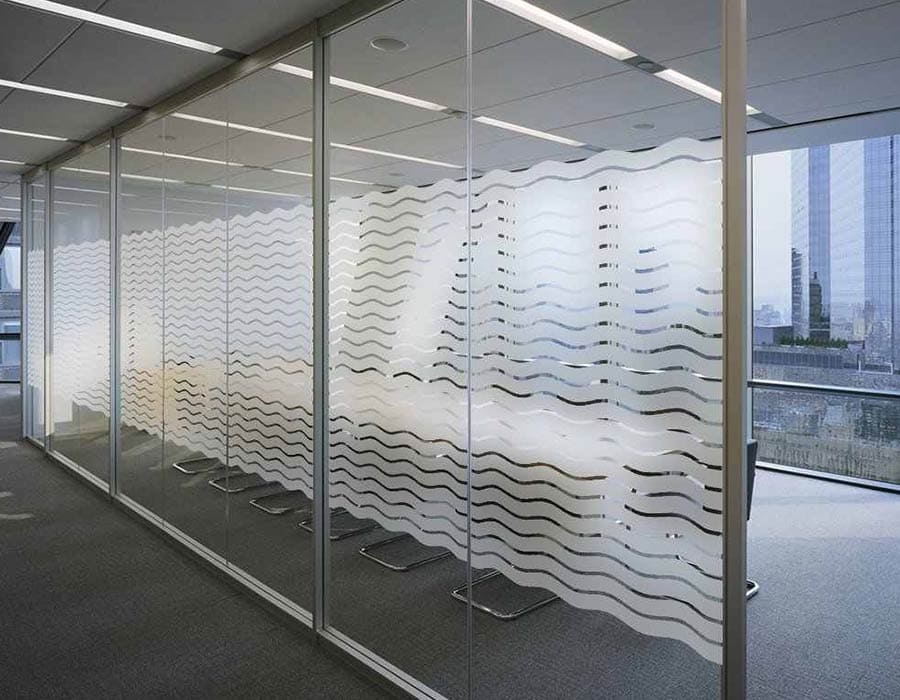
Frosted glass film—also called frosted window film, frosting film or, informally, a frosted glass sticker—is a translucent material applied to existing glass. It scatters light and blurs the view through the pane, creating a similar visual effect to etched or sandblasted glass without permanently altering the glass itself.
What is frosted glass film?
Frosted film is a decorative and privacy film applied directly to a glass surface. Instead of leaving the pane fully transparent, the film diffuses the view through it. Light can still pass through, but people, objects and details on the other side become blurred.
In Dubai, customers may search for the same product using terms such as frosted glass stickers, frosted window film, privacy film, glass frosting or frosted decals. The exact material and finish can vary, but these phrases often refer to the same general category of applied glass film.
How does frosted film create privacy?
Clear glass allows light and a clear image to pass through. Frosted film changes the way visible light passes through the surface so that the image is diffused rather than sharply visible.
This is why frosting is useful when a room should remain bright but direct visibility needs to be reduced. It is common on meeting-room partitions, glass doors, reception areas, clinics, salons and internal office glass.
Frosted film should not automatically be described as “100% privacy.” Depending on lighting, distance and film density, silhouettes or movement may still be visible even though fine details are obscured.
What types of frosted glass film are available?
| Type | What it looks like | Typical use |
|---|---|---|
| Plain full frost | Uniform translucent finish | Meeting rooms, consultation spaces, full-panel privacy |
| Privacy band | Horizontal frosted strip | Office partitions and corridors |
| Gradient frost | Moves gradually from frosted to clear | Modern offices and design-led interiors |
| Patterned frost | Repeated shapes or decorative motifs | Retail, hospitality and office interiors |
| Logo-cut frosting | Logo appears within or against the frost | Corporate offices, reception areas, boardrooms |
| Printed frosted film | Frost effect combined with printed graphics | Branded glass and campaign applications |
Is frosted film the same as real frosted glass?
No. Real frosted glass is physically altered during manufacture or treatment—commonly through processes such as acid etching or sandblasting. Frosted film is applied to the existing glass surface to imitate a similar translucent appearance.
The visual result can be similar, but the practical decision is different. Film is removable and easier to change; etched glass is permanent. If you are deciding between those two options specifically, see our frosted film vs etched glass guide.
Where is frosted glass film used?
For visual separation between workspaces without replacing clear glass.
To reduce direct sightlines while keeping daylight moving through the space.
For visibility marking, privacy and branding.
To screen work areas and add logos or identity elements.
For consultation or treatment areas that need visual screening.
For decorative glass, partial screening and branded interiors.

What are the practical benefits of frosted film?
What frosted film does not automatically do
Some older marketing content makes broad claims about frosting, but the actual performance depends on the exact product. Frosted film should not automatically be assumed to provide complete opacity, significant solar control, strong UV protection, heat rejection or energy savings.
Those features belong to the film specification. If glare, heat or UV reduction is the main goal, a dedicated window tinting or solar-control film may be more appropriate than standard decorative frosting.
How much privacy does frosted glass film provide?
Privacy depends on four main variables: film density, how much of the glass is covered, the distance between people and the glass, and lighting conditions on each side.
Full-panel frosting gives stronger visual screening than a narrow band. Partial frosting can still work very well in offices when it is positioned around real seated and standing sightlines.
For a room-by-room approach, our office glass privacy guide explains full, partial, banded and branded coverage in more detail.
Can frosted film include a company logo?
Yes. One of the main advantages of applied frosting is that the privacy layer can also become part of the office branding system.
The pane is frosted while the logo remains transparent.
The logo itself is frosted onto otherwise clear glass.
A repeated brand motif can continue across several glass panels.
A privacy strip can incorporate a logo, name or geometric identity.
How is frosted glass film installed?
The glass is measured, cleaned and prepared before the film is positioned and applied. For commercial work, installation quality depends on accurate measurements, clean surface preparation, consistent panel alignment and precise trimming around frames, corners and door hardware.
Simple DIY applications exist, but multi-panel office work, branded cut-outs and continuous privacy bands benefit from professional measurement and alignment—especially where several adjacent panes need to look like one coordinated design.
Can frosted film be removed or replaced?
In most normal applications, applied film can be removed from the underlying glass and replaced with a new design. That makes it useful for leased offices, rebrands, room changes and temporary privacy requirements.
Removal can still depend on the film type, installation age and glass condition, so it is better to describe frosting as removable and replaceable rather than promising that every installation will lift away instantly with no residue in every situation.
Which type should you choose?
| Your main goal | Start with |
|---|---|
| Strong visual screening | Full or broad-coverage frosting |
| Office privacy without closing the space | Mid-height privacy band |
| Modern decorative finish | Gradient or patterned frosting |
| Office branding | Logo-cut or branded frosting |
| Temporary / flexible fit-out | Applied film rather than permanent etching |
| Heat or solar control | Consider dedicated window tinting film instead |
What to send before requesting a glass frosting quote
- Photos of the complete glass area.
- Panel measurements or approximate overall dimensions.
- Coverage — full, partial, banded or gradient.
- Privacy requirement — basic screening or stronger visual separation.
- Artwork if a logo or branded pattern is needed.
- Location for installation planning.
- Deadline for fit-out, handover or opening.
Not sure which frosting type you need?
Send J Designo photos of the glass and explain whether the main goal is privacy, branding or both.
Frequently asked questions about frosted glass film
Need help choosing the right specification?
Send the product or service, quantity, artwork status and deadline. For signage or installation work, include approximate dimensions and site photos where possible.